Quick verdict
If you are publishing a book (print or audio), you need an ISBN. If you are selling physical goods, merchandise, toys, or consumer products, you need a UPC. If you sell a book bundle with merchandise, you may need both.
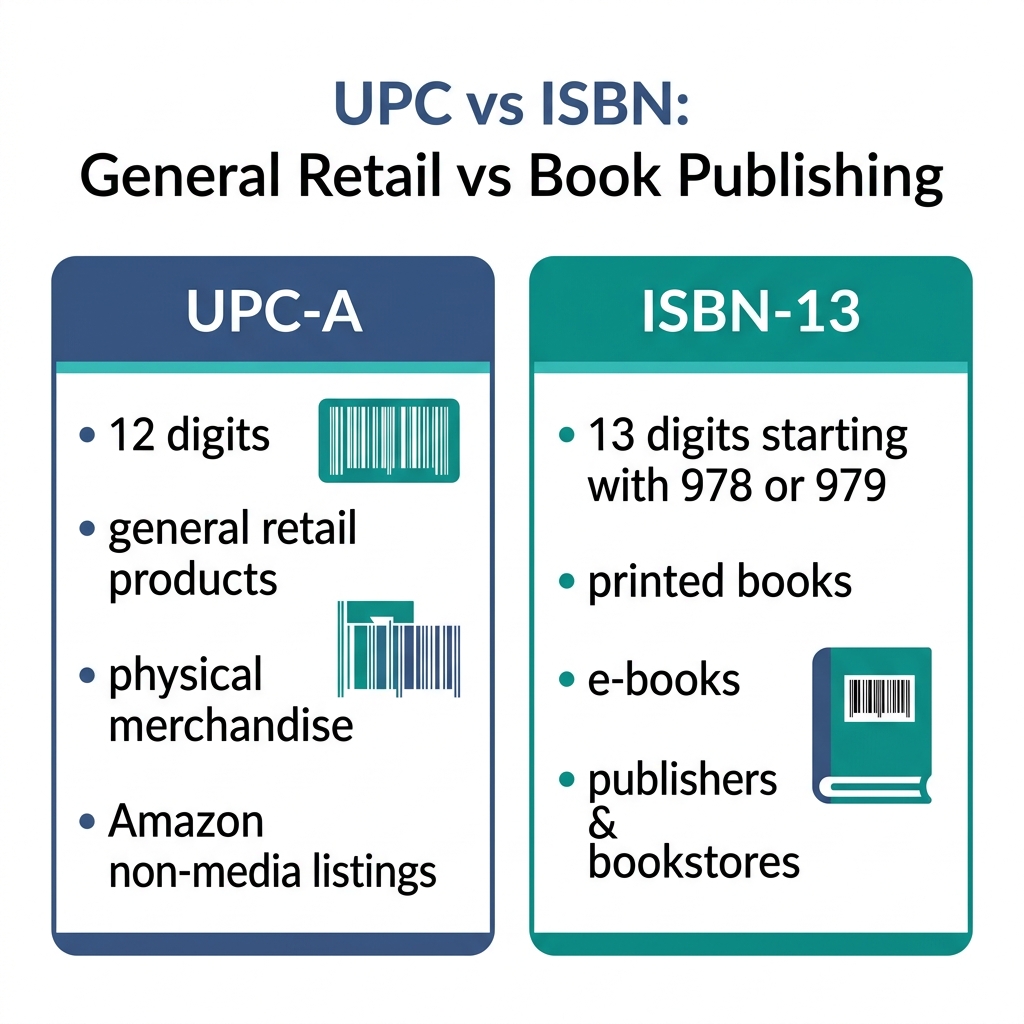
Side-by-side comparison
| Feature | UPC Code | ISBN Code |
|---|---|---|
| Target industry | General retail & consumer goods | Book publishing & editorial media |
| Digit count | 12 digits (UPC-A) | 13 digits (starting with 978 or 979) |
| Issuer | GS1 / UCC legacy prefixes | National ISBN agencies (Bowker in US) |
| Amazon category | All non-media product categories | Books, eBooks, hardcovers |
Understanding the ISBN structure
ISBN-13 is an international standard for books. All 13-digit ISBNs begin with either prefix 978 or 979, followed by group identifiers, publisher codes, title numbers, and a check digit. Bookstores and libraries rely on ISBNs to identify specific editions, cover designs, and printings.
When to use a UPC for media products
While books require ISBNs, non-book media (such as board games, vinyl records, movie DVDs, and blank journals) use standard 12-digit UPC codes. If your product is a journal with guided prompts or an unprinted notebook, Amazon often accepts a UPC rather than an ISBN.
Ready to get your barcodes?
Starting at $8. One-time, no renewal, instant delivery.